
Destination
Destination
Hidden among the remote islands of the northern Kimberley, Jar Island is a small but culturally significant destination that offers travellers an intimate connection with Australia’s ancient indigenous heritage. Unlike larger sites, Jar Island’s charm lies in its subtle, almost secretive presence — a quiet enclave that feels untouched by time.
Jar Island is named after the pot shards found here, brought to the island by Macassan fisherman harvesting sea cucumbers (also known as trepang).
Jar Island is renowned for its Gwion Gwion rock art, some of the oldest figurative paintings in the world. Unlike the more expansive galleries on Bigge Island or Vansittart Bay, the art here is delicate and intricately detailed, featuring elongated human forms adorned with ceremonial garb and ornaments.
Expedition guides often lead guests slowly along the rock galleries, explaining the symbolism of each figure and the connection of the Wunambal Gaambera people to the land and sea. It’s an experience that invites contemplation — a rare chance to step into a world that has remained largely unchanged for millennia.
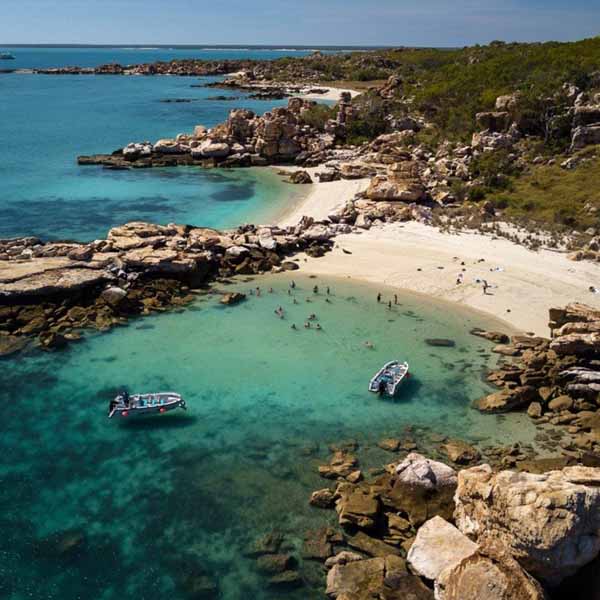
Low sandstone cliffs rise above secluded sandy beaches, while pockets of pandanus and paperbark trees provide shade and shelter. Tidal flats and shallow rock pools surrounding the island create a habitat for small fish, crabs, and a variety of shorebirds.