
Destination
Destination
In September 1820, Lieutenant Philip Parker King pulled into a beach, now known as Careening Bay, to repair rotten timber in the hull of his 76-tonne cutter, the HMC Mermaid. The bay provided good shelter and access to fresh water, and Parker King was able to utilise metal salvaged from a nearby shipwreck to conduct repairs.
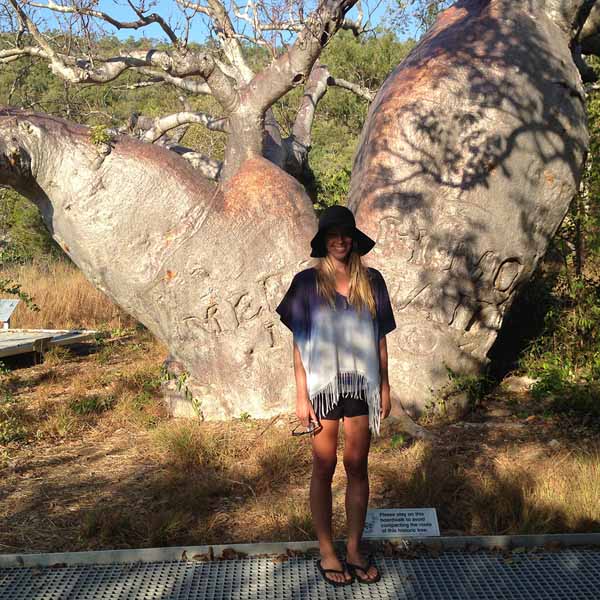
During this time, the ship’s carpenter carved the inscription “HMC Mermaid” into a nearby boab tree and, almost two centuries later, it is clearly visible today. The twin-trunked boab is now about 12 metres in circumference.
In 2011, Uunguu rangers helped construct a boardwalk to safeguard the tree’s root system from tourists’ trampling feet.
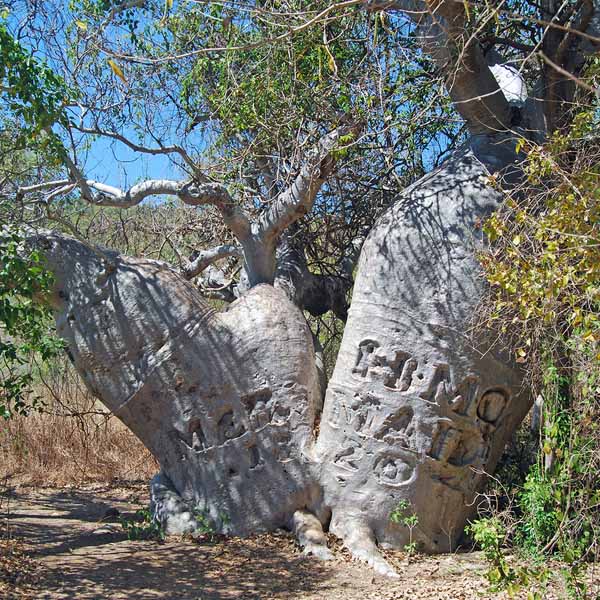
Careening Bay is a place where history, exploration, and natural beauty come together in a striking coastal setting. Sheltered by sandstone cliffs and fringed by tidal flats, this peaceful anchorage is most famous for its connection to early maritime exploration — specifically, the visit of Phillip Parker King and his crew aboard the HMS Mermaid in 1820.
Careening Bay takes its name from an old nautical term meaning “to beach a ship for repairs.” When the Mermaid ran aground on a reef during King’s coastal survey, the crew brought her ashore here for essential maintenance. To mark the occasion, the ship’s carpenter inscribed “HMC Mermaid 1820” into the trunk of a boab tree.
Beyond its history, Careening Bay is simply beautiful. The bay’s calm waters are surrounded by golden sandstone and scattered with mangroves that attract an array of birdlife. At low tide, the exposed shoreline reveals intricate rock pools and shell beds, while the surrounding cliffs glow deep orange under the afternoon sun. Many cruises anchor here overnight, offering guests a chance to experience the Kimberley’s shifting colours at sunrise and sunset — a photographer’s dream.

